Understanding Aspect Ratios: Choosing the Right Video Format
Before you ever step on set, one of the most important decisions you can make as a filmmaker is your aspect ratio. The format you choose shapes how your story feels, how your audience connects with it, and where it ultimately lives.
There are various aspect ratios you can shoot natively on, or output to final delivery. While you are able to export from your non-linear editing program of choice, that is not always the most strategic way of developing your projects viewing specs.
At Parthenon Pictures, we always consider aspect ratio early in pre-production, so the creative vision aligns with the platforms, tools, and deliverables we’re working with. Here’s a breakdown of the most common formats we use and what they mean for your project.

Behind the scenes of a branded documentary shot for both 16×9 and 9×16.
16:9 — The Modern Standard
If you’ve watched TV or YouTube in the past decade, you’ve seen 16:9. It’s the current standard for HD video and one of the most versatile aspect ratios available.
Best for: Commercials, branded content, web videos, TV spots.
Why it works: It’s familiar, widely supported, and plays natively on most screens.
Storytelling impact: Offers balance between intimacy and scope without distracting from the content.
Vertical Re-Purposing: This gives you the most room to re-purpose for additional vertical deliverables.
Most of our commercial productions start in 16:9 because it’s flexible and delivers across multiple platforms with minimal adjustments.
Anamorphic — The Cinematic Look
If you want your project to feel like a movie, anamorphic widescreen is the way to go. With ratios like 2.39:1, anamorphic delivers that unmistakable cinematic feel, wider frames, unique lens flares, and a more immersive viewing experience.
But isn’t this aspect ratio just adding letterbox black bars on your video in post? Nope! Real anamorphic footage is actually from specialized lenses designed for this large format look. The optics of the lens squeeze the image, and with modern camera such as the Alexa LF or RED you de-squeeze the image.
Best for: Narrative films, cinematic commercials, high-end brand campaigns.
Why it works: Creates an epic, elevated look audiences instantly recognize from feature films.
Storytelling impact: Adds scale and emotional weight, especially for stories meant to feel larger-than-life.
When clients want a commercial that blurs the line between branded content and cinema, anamorphic is our go-to choice.
But beware, to shoot true anamorphic footage the cost of your production will increase due to the specialized lenses and cameras you would need to shoot it natively. Also, if you need to deliver vertical cuts for your client, you will struggle with just anamorphic footage, and would need to most likely shoot additional vertical footage on set.
4:3 — A Legacy Format with New PurposE
Once the standard for early television, 4:3 (square-like ratio) has made a surprising comeback. Today, filmmakers often use it for artistic or nostalgic purposes.
Best for: Mood-driven projects, stylized campaigns, music videos, experimental films.
Why it works: Evokes intimacy, nostalgia, and a sense of constraint.
Storytelling impact: Forces focus on the subject, often making characters feel trapped or isolated within the frame.
Amazon: Although not quiet 4x3, Amazon accepts 1x1 videos for their e-commerce products.
I’ve seen 4:3 used beautifully in modern films and branded work to create a distinct emotional tone. It’s proof that “old” formats can feel fresh when paired with the right story.
My suggestion if you are planning on delivering a project in 4:3 is to shoot it in 16x9, but using your cameras built in frame guides to block every shot into the aspect ratio. This gives you more room in post production to re-frame and also have the option for additional ratio deliverables.
9:16 — Built for Social
In the age of mobile, 9:16 vertical video is king. TikTok, Instagram Reels, and YouTube Shorts have made vertical storytelling a necessity for brands.
Best for: Social campaigns, short-form ads, behind-the-scenes content.
Why it works: Native to mobile screens, no rotation required. Meets audiences where they are.
Storytelling impact: Demands fast hooks, bold visuals, and tighter framing since there’s less horizontal space to play with.
At Parthenon Pictures, we don’t treat vertical as an afterthought. We design campaigns with 9:16 in mind, ensuring your story works both as a standalone piece and as part of a larger strategy.
But beware, if you shoot natively in vertical there will be no room to offer a 16x9 version of your project unless you edit creatively.
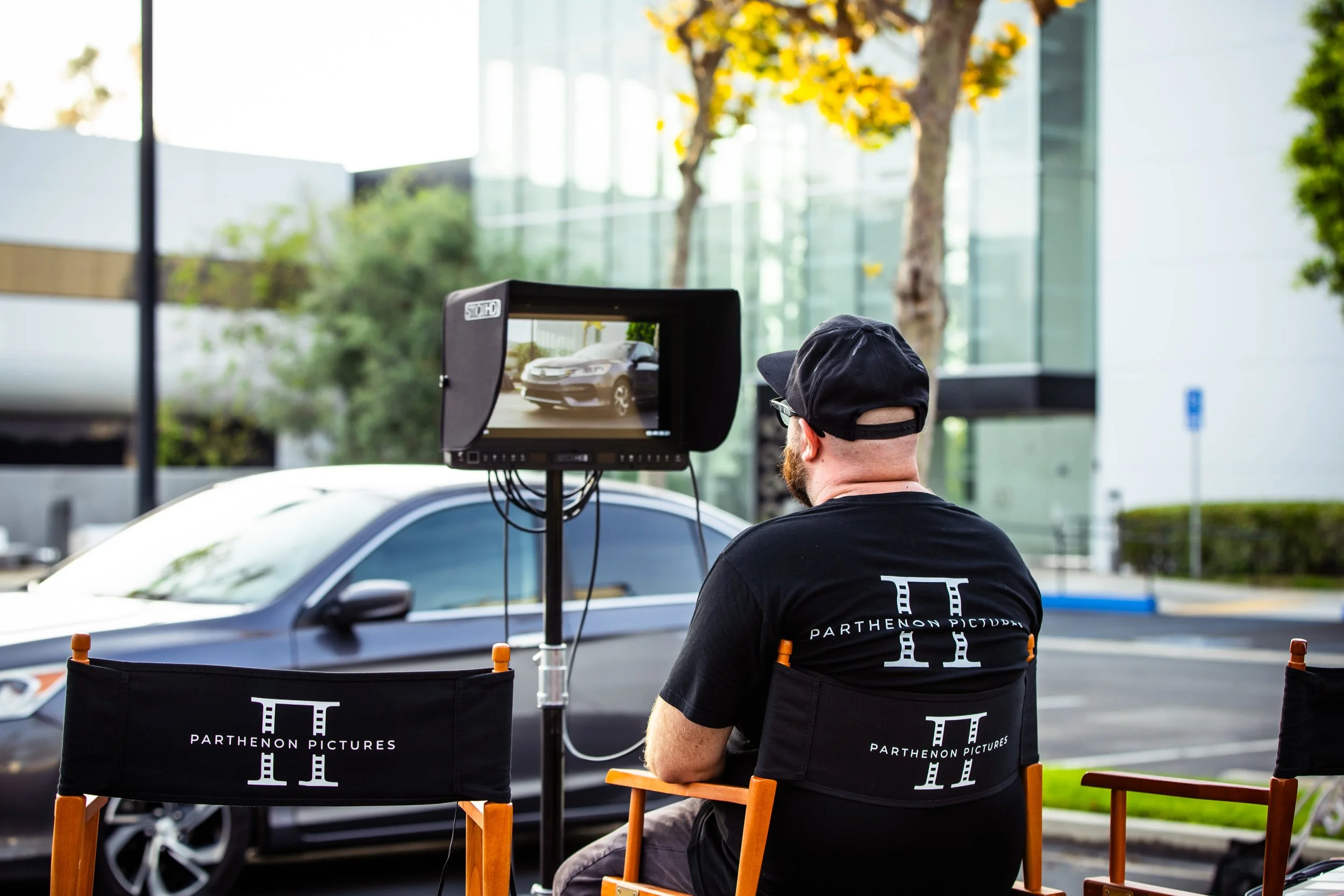
Filming in the traditional 16×9 format.
Final Thoughts: Story First, Ratio Second
Aspect ratio isn’t just a technical choice, it’s a storytelling tool. Whether you’re creating a cinematic commercial in anamorphic, an intimate branded doc in 4:3, or a social-first campaign in 9:16, the format should always serve the story.
Be creative! Yes, there are rules in filmmaking, but break them! Some of my favorite films mix aspect ratios. Of course, this is done with motivation that serves the story, but when you start using aspect ratio as a tool your stories will develop even more depth.
At Parthenon Pictures, we collaborate with clients to make these choices early, so every frame feels intentional and every deliverable works across platforms.