How to Choose the Right Camera for the Job
One of the most common questions filmmakers and clients ask is: What camera should we use? The truth is, there’s no one-size-fits-all answer. The right camera depends on the story you’re telling, the scale of the production, and the resources you have available.
When I started Parthenon Pictures, we’ve evolved our gear as our projects have grown, starting small, renting when needed, and eventually investing in tools that matched our vision.
The main thing for me that I focused on was the industry standard, making sure the accesories I was investing in were not camera specific but could grow our camera packages. Here’s how we think about choosing the right camera for the job.
Starting Out: The Canon C200
When we first launched Parthenon Pictures, our go-to camera was the Canon C200. It was versatile, lightweight, and perfect for a wide range of projects. From commercials to short-form branded content, it gave us cinematic image quality without slowing us down.
I was used to this camera and knew how powerful it was for the price, but also knew the limitations. The work we had lined up was absolutely perfect for this powerhouse.
Some of our earliest (and most memorable) jobs were filmed on this camera, proving that you don’t need the most expensive gear to produce professional results.

Canon C200 paired with a DZO Pictor Lens
Scaling Up: Renting the ARRI Alexa
As our projects grew in scope, so did the demands of our productions. For larger jobs, we rented the ARRI Alexa, an industry standard for feature films and high-end commercials.
A commercial came up that I knew we needed to elevate the image quality as this would be our showcase project we would be pitching to new clients.
The Alexa is known for its color science, dynamic range, and reliability, which is why it’s trusted on everything from Hollywood blockbusters to luxury brand campaigns. Renting it gave us the flexibility to deliver top-tier quality when a project demanded it, without committing to the cost of ownership.
But before you think you can just rent an Arri, you need to know what a massive undertaking it is. We rented it from our Director of Photography who uses it often, and the extra camera support, lighting and lenses definetly cost a pretty penny to rent and purchase.
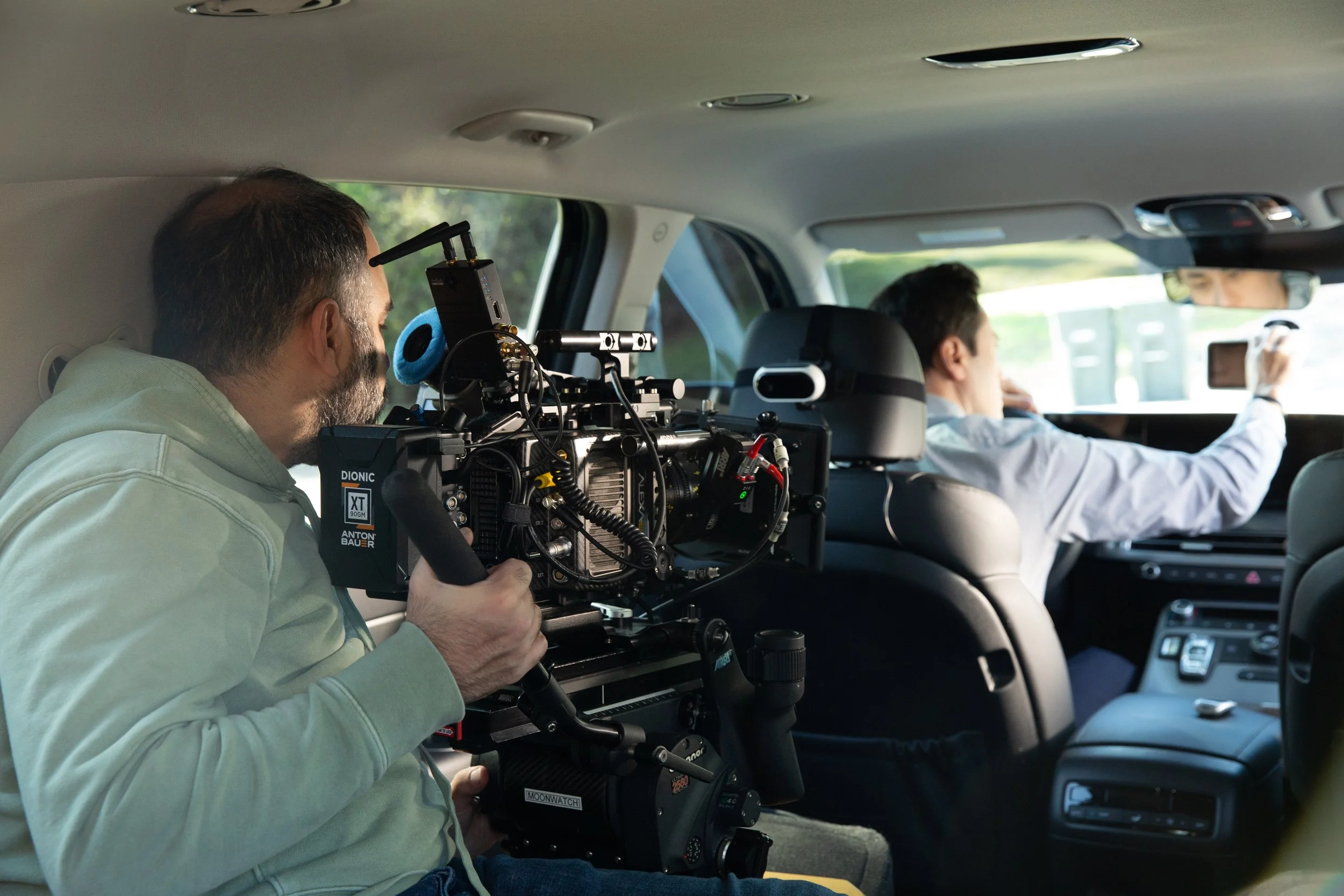
Arri Alexa used on our Tiny Traveler Baby Camera Commercial.
Our Upgrade: The RED Komodo X + DZO Arles Primes
Eventually, we knew it was time to upgrade our in-house setup. We invested in the RED Komodo X, a camera that brought our ecosystem closer to industry standard while still offering versatility for commercial and branded work.
Alongside the camera, we made a long-term investment in lenses, purchasing DZO Arles Vista Vision Primes. Why? Because while cameras evolve quickly, great glass lasts. These lenses will grow with us no matter what camera body we use in the future, ensuring that our work maintains a consistent, cinematic look.
This also allows us to have multiple cameras in house. We still have our workhorse Canon C200, and it still is utilized on many jobs. Sometimes it is preferred do to its run and gun nature so its perfect for one person crew gigs.
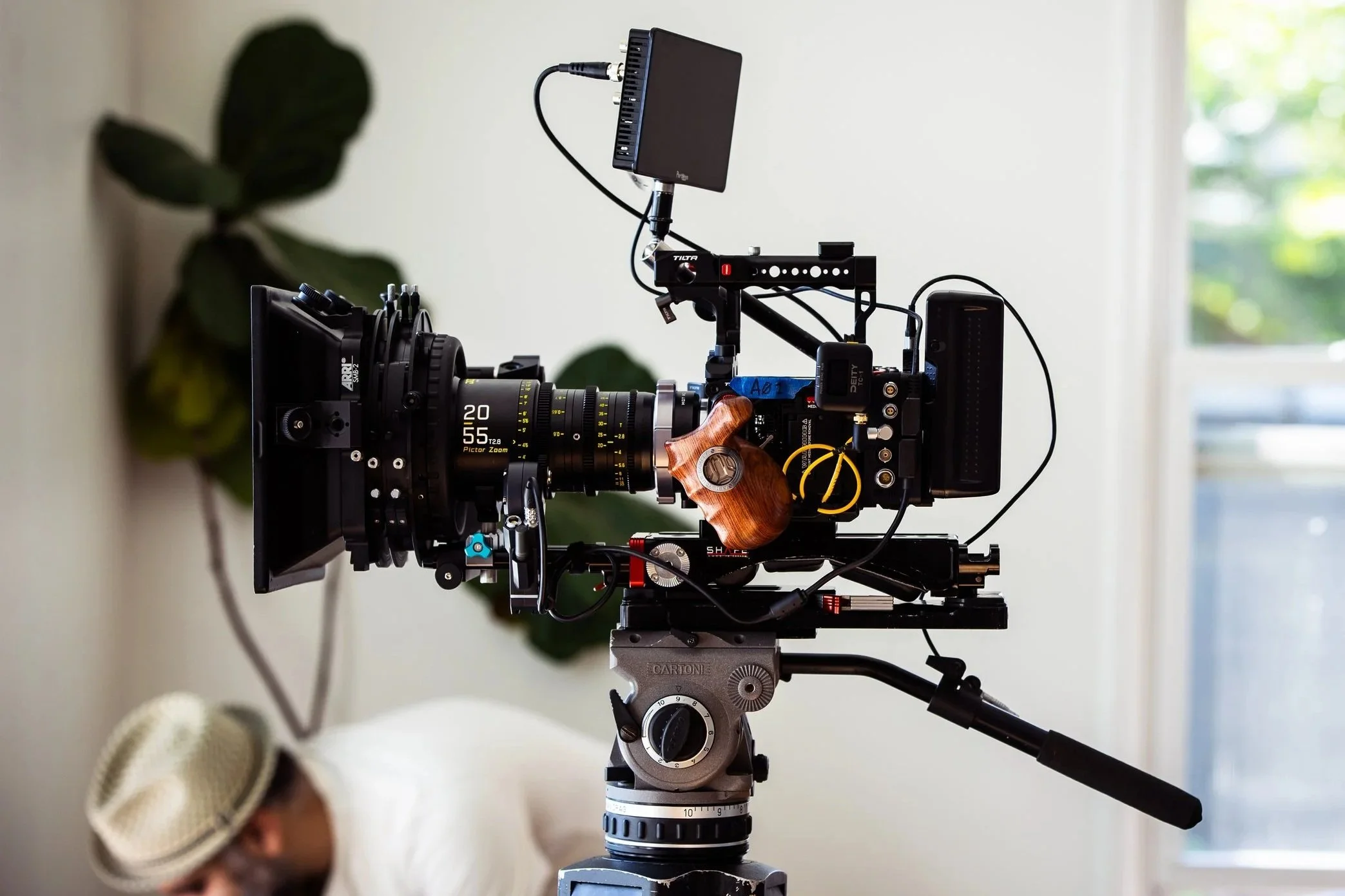
RED Komodo X on its inaugural commercial shoot.
A Surprise Addition: The Osmo Pocket 3
Not every tool in our kit has to be big and intimidating. Recently, we purchased the DJI Osmo Pocket 3, and it shocked us with how good it was. Compact, stable, and incredibly capable, it has now earned a permanent spot in our production arsenal. With the use of additional stabilization, and ND filters it invaluable for our automotive shoots.
In fact, we recently used the Osmo Pocket 3 to shoot background driving plates for one of our largest commercial spots to date. It handled the job with ease, delivering footage that cut seamlessly into a much larger-scale production. Sometimes the right tool isn’t the one you expect, it’s the one that gets the job done beautifully.
It’s Not Just the Camera
Here’s the part most people forget: it’s not the camera that makes great work, it’s how you use it. Lighting, blocking, composition, and lenses all play a bigger role in shaping the final image than the camera body itself.
You can have the most expensive setup in the world, but without a strong story and visual strategy, the results won’t resonate.

Lighting, lenses, filters, and most importantly a creative eye helps craft the image.
Use What You Have
For filmmakers just starting out, don’t let gear hold you back. If all you have is an iPhone, use it. Some of today’s best indie films and viral campaigns were shot on phones. What matters is that you start.
Don’t use the excuse of “not having the right camera” as a crutch for not making your film. Focus on story, creativity, and execution. The gear will come later.
Final Thoughts
Choosing the right camera for the job isn’t about chasing the latest specs, it’s about matching the tool to the story. At Parthenon Pictures, we’ve worked with everything from Canon to ARRI to RED, and the lesson is always the same: strategy and storytelling matter most.