Do You Really Need a Big Crew to Create Cinematic Work?
When most people picture a film set, they imagine dozens of crew members, multiple box trucks full of gear, and a budget that rivals a small nation. But the truth is, cinematic work doesn’t always require a massive crew. What it does require is strategy, planning, and experience.
A commercial we produced earlier this year was the perfect storm of high expectations with a limited budget. We were tasked to produce a dash camera commercial for BEON that would be showcased on Walmart.com.
At Parthenon Pictures, we’ve proven time and time again that smaller teams, when used effectively, can deliver high-quality, cinematic results.
The commercial produced for the BEON Dash Camera.
Crafting a Vision With Limited Resources
For the BEON project, we knew from the start that our resources were limited. The budget wasn’t built for a giant crew or multiple shoot days. So instead of cutting corners, we leaned into strategy.
Script First: I wrote the script around what I knew we could execute. That meant simplifying locations, keeping the story focused, and designing shots that could be done without excessive setup.
Location Locked: We secured a location for free, a huge cost-saver that didn’t sacrifice production value.
Lean Crew: With just a core team of three, we were able to stay agile on set and move quickly without compromising quality.
Minimal Talent: We kept the cast to one actor, making the story more intimate while reducing costs.
Shot List Discipline: Every shot was planned in advance. That preparation meant we captured exactly what we needed without wasting time or crew hours.
The result? A polished, cinematic commercial that looked far bigger than the resources we had to make it.
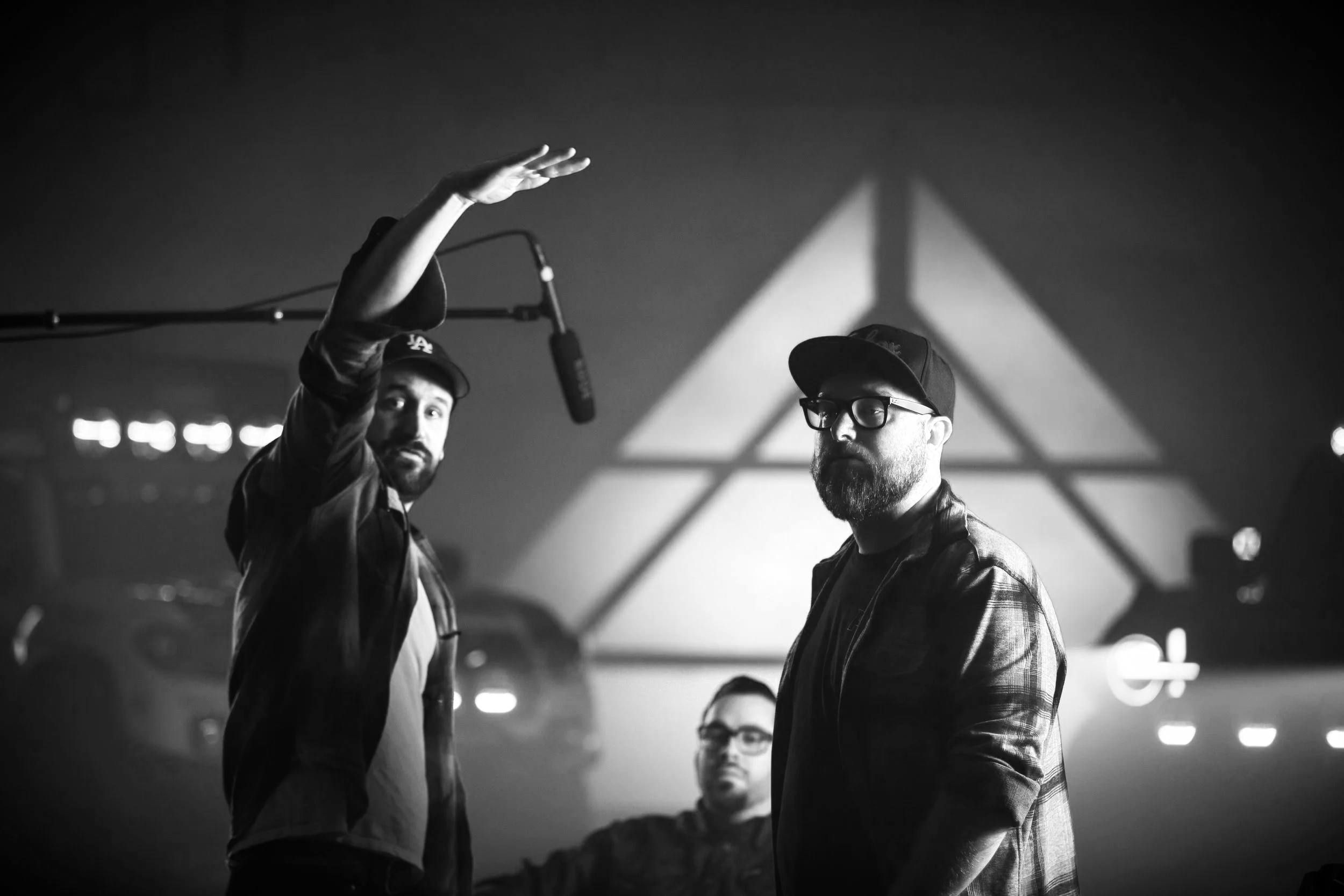
A tighter team makes room for more intimate collaboration.
Why Smaller Crews Work
There are times when I am on set that I wish I had a more robust team, it makes my job easier. I don’t want to be directing, but also pulling focus while watching the monitor (I’ve done this more times than I like to admit). But small crews often lead to more creative, collaborative sets. With fewer moving parts, collaboration is more conducive. Although it’s a small team, every person has a voice and we can lean into it. Also, the director, DP, and crew can adapt quickly to challenges without slowing production down.
For brands, this also means:
Lower production costs.
Faster shoot days.
A more personal, hands-on creative process.
Strategy Beats Scale
Of course, there are times when big crews are necessary. Some commercial productions, a large cast, and even complex stunts will balloon your crew quickly. I do not believe in overworking or over extending my crew. Making crew members wear multiple hats can quickly cause burnout, and ultimately a disrespect to be paying some for multiple jobs. There are specific projects where a smaller crew paired with strong pre-production planning is all you need to achieve cinematic results, without running your crew on empty.
At Parthenon Pictures, we specialize in this balance. We don’t just show up with cameras, we strategize from the script stage, so every shot and every decision serves both the story and the budget.
Small Team, Big Impact
The BEON commercial proved a simple truth: cinema isn’t about how many people are on set, it’s about how prepared you are before the cameras roll.
Because with the right strategy, small crews can create big results.