What I Learned Filming with Rain on a Low Budget Commercial
There’s something about rain on camera that immediately elevates a spot. It adds drama. I romanticize rain on film, seeing light reflect on the wet ground, the texture of your scene gets more dynamic. But what they don’t tell you is while filming rain, it also adds chaos, especially when you’re doing it on a tight budget. I recently directed a commercial that required rain, and while the final product was worth it, it came with a lot of hard-earned lessons.
If you’re thinking about adding rain to your next project, here’s what I learned recently, and hopefully will help you out moving forward.
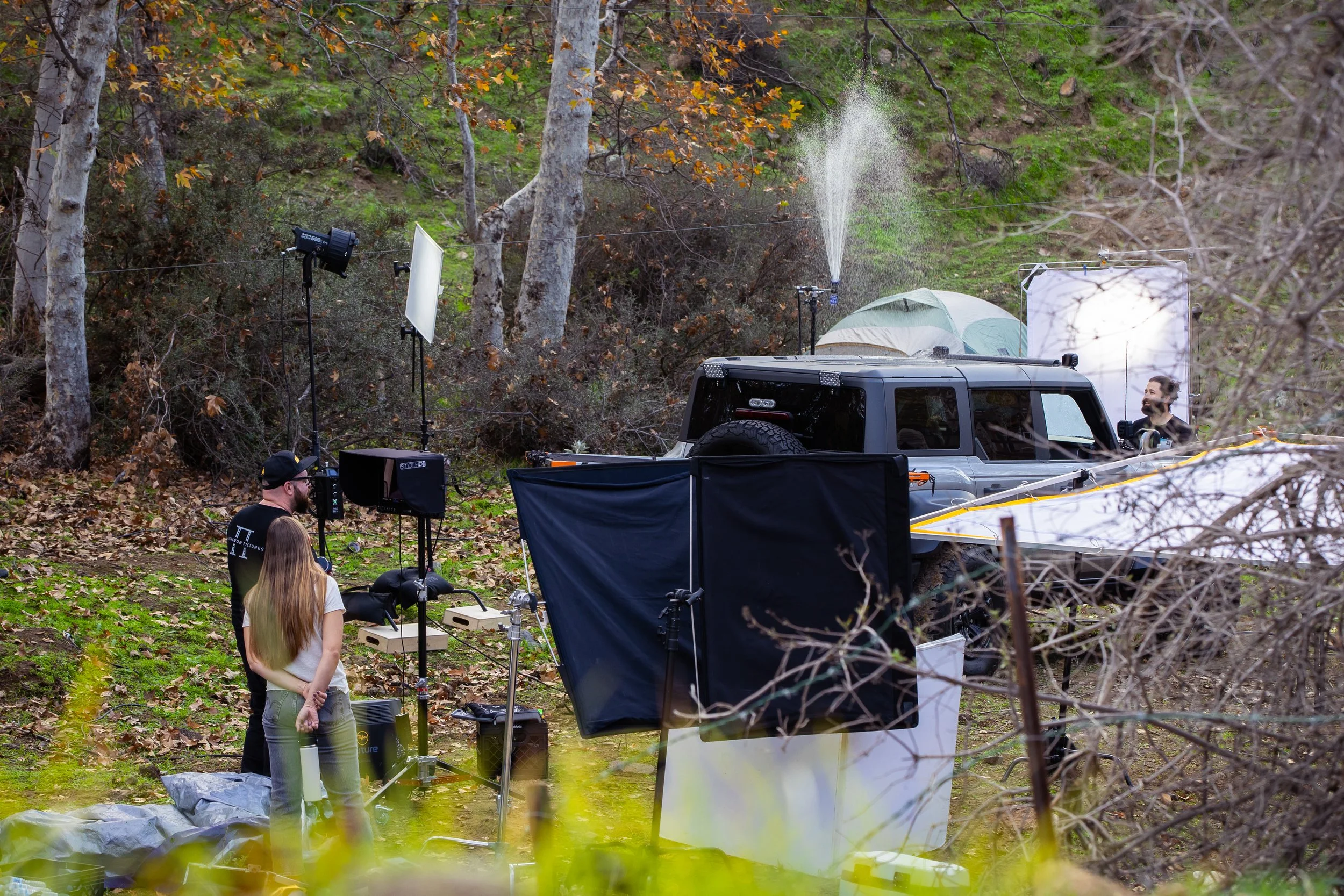
On set of our latest commercial for ProJump.
Prep. Prep. Prep.
Rain is not something you “figure out on the day.” Once it starts falling, the clock is ticking. I just saw a post on a film industry crew social page, talking about showing up to set and learning there would be rain day of- PLEASE don’t be that producer.
Before we ever rolled camera, I had the shot list dialed in. I knew exactly what shots we needed, in what order, and how long each setup could realistically take. Rain removes your margin for error, if you don’t know what you’re shooting next, you’ll burn time fast.
This isn’t about being rigid; it’s about being prepared enough to move quickly when things inevitably go sideways.
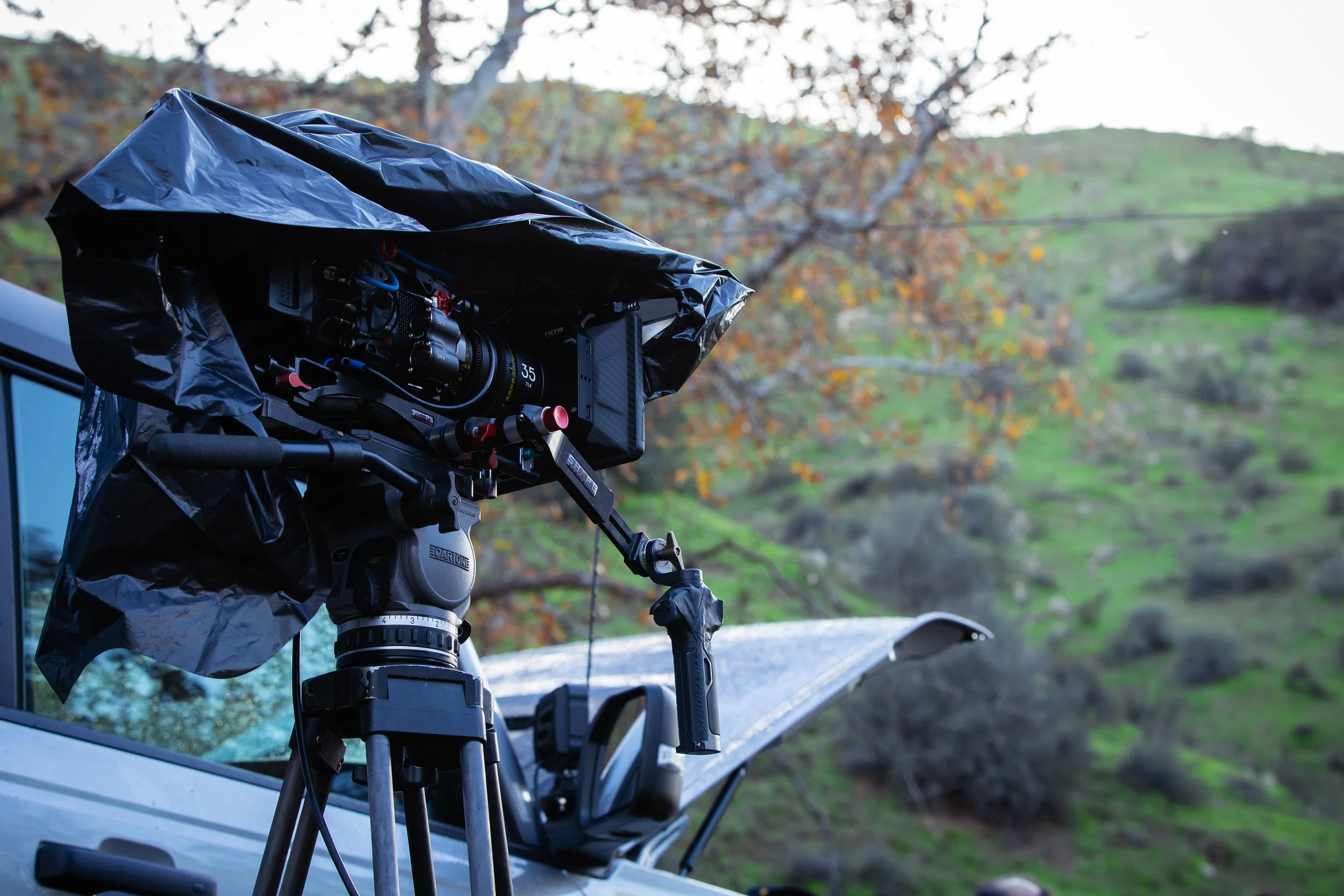
Our RED Komodo X and DZO Arles lens ready to take on the storm.
Continuity Is Everything
Once rain starts, there’s no going back.
Wardrobe gets wet. The ground gets soaked. Hair changes. Makeup changes. And depending on your location, things may never dry during your filming window.
Plan your shoot around when the rain starts. Any dry shots should be captured before water hits the scene. After that, commit fully.
Sometimes you will get happy accidents though. On our shoot we planned on filming the establishing shot before the rain starts later in the shoot because one of our actors was running late to set. We shot the scene of our other actor first where he is sitting in the car. Where we messed up was our actor on had one pair of pants for his costume. They were NOT supposed to get wet, but during the take… they did. We lost our only opportunity to get our establishing shot earlier.
So we pivoted. Instead of the commercial spot starting without rain and then it begins, we started the commercial mid-storm. This elavated our hook with the commercial, and amped up the tension.
Please note: bring duplicate costumes. Multiple sets. No exceptions. Even if you think you won’t need them, you will. I didn’t think we need multiple pairs of pants because they were never going to get wet the begin with… but they did.
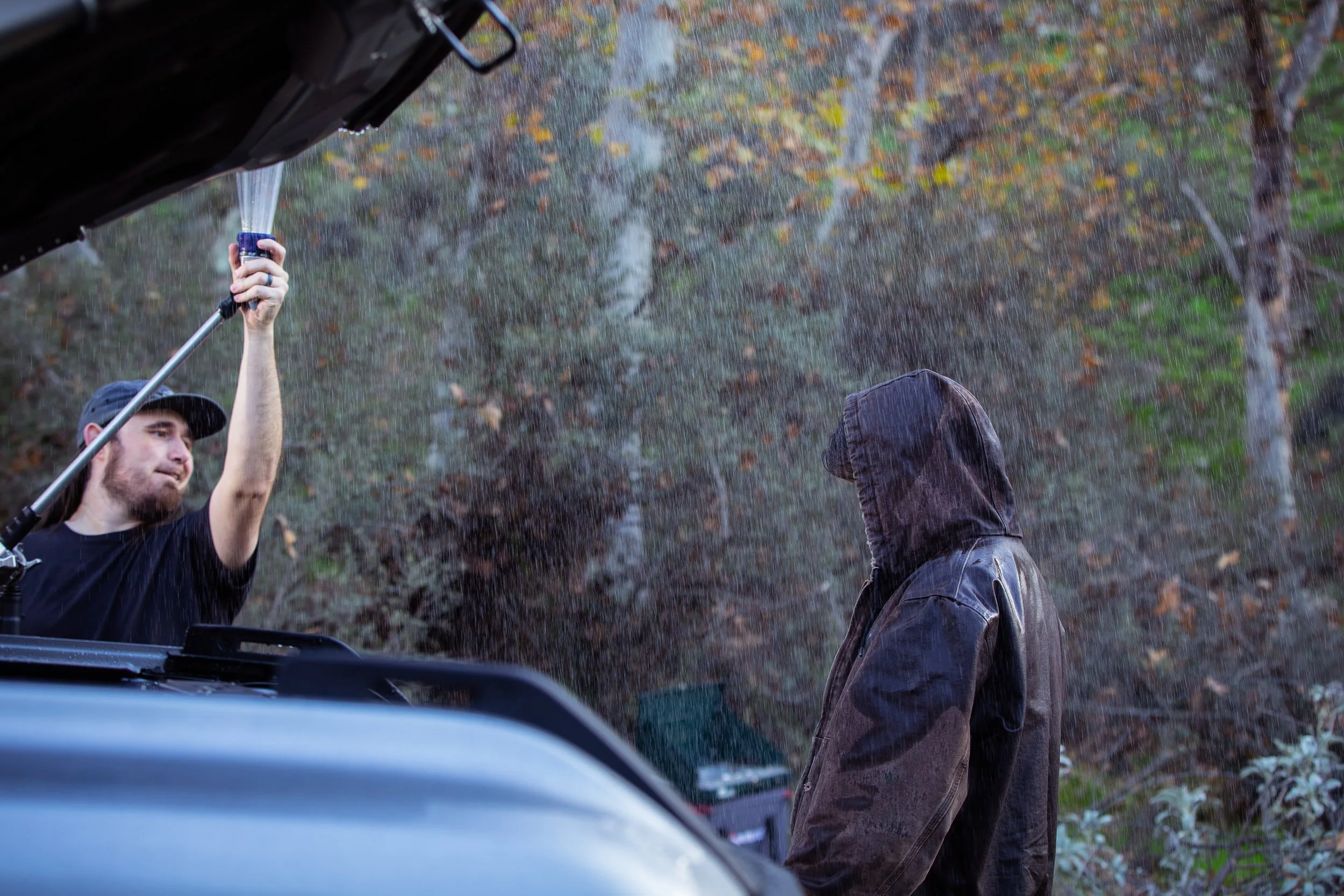
You forget how quickly you get SOAKED when you are standing under water being dumped on you.
Everything Will Get Wet (Everything)
Yes, protect your camera. That’s obvious.
What’s less obvious is how messy everything else becomes when you’re filming in rain, especially outdoors. We were filming in the woods, and within minutes the ground turned to mud. Cases, stands, cables… all of it.
A few things that saved us:
Tarps for gear to sit on
Towels. Lots of towels.
Being militant about organization
Also, build cleanup time into your schedule. Wrapping a rain shoot isn’t just packing up; it’s cleaning. The most time-consuming part? Cables. Stingers. SDI. Power runs. I spent a lot of time wiping down every cable so it would actually be usable on the next job.
If you skip this step, you’re just pushing the problem to your future self.
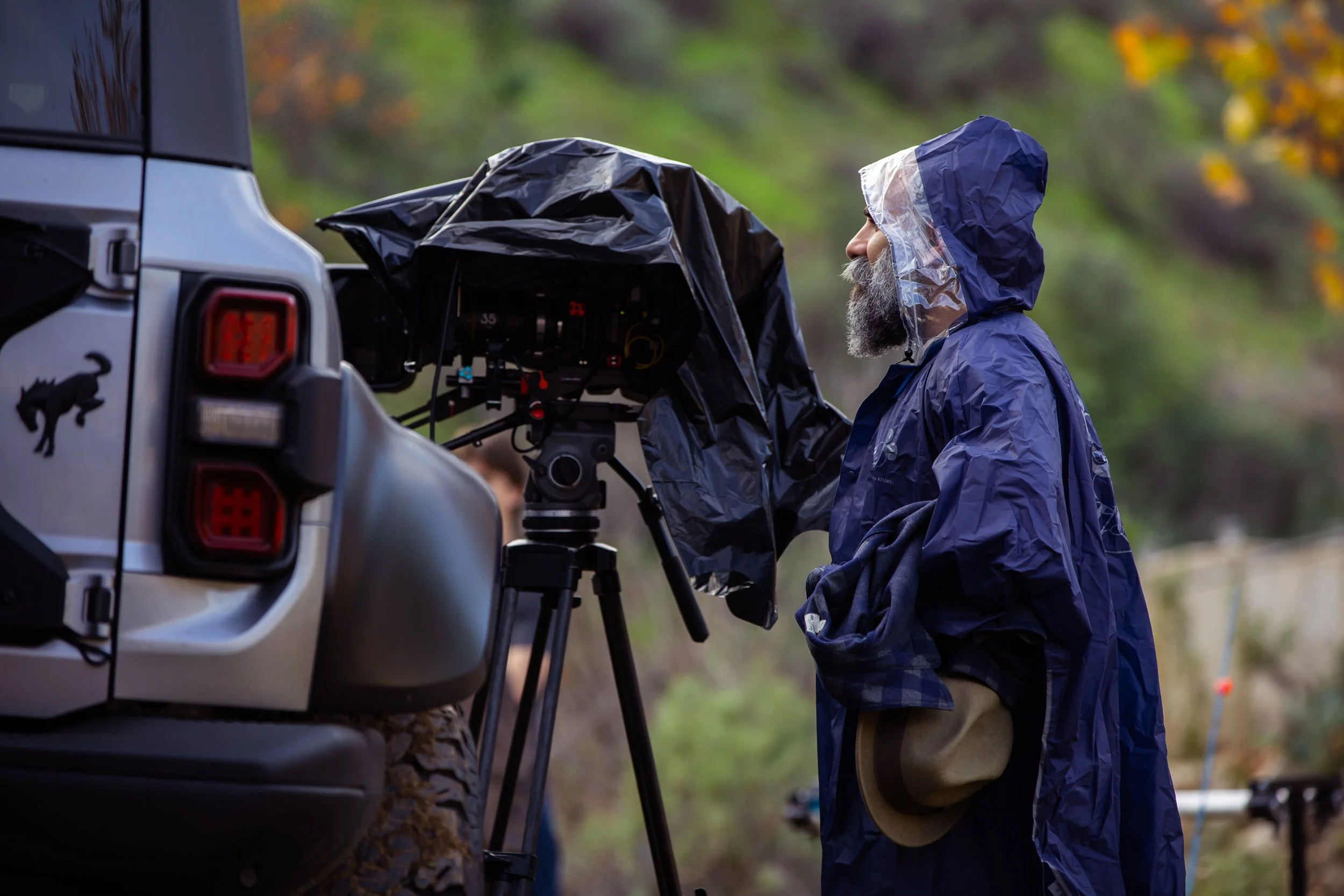
Gotta cover your Director of Photography too.
Lighting Rain (Without Overcomplicating It)
I’m not going to get into rain rigs here, there’s plenty of great information out there on that. What I will say is this:
If you don’t backlight rain, it won’t read.
Rain needs contrast. It needs to catch light. You also need to be strategic with blocking so you can take advantage of whatever natural light you have, especially on a low-budget shoot.
One of the best tricks we used was thinking about rain like day-for-night:
Don’t show the sky
Avoid hot highlights
Keep your exposure controlled
You don’t need a massive lighting package, but you do need intention. If rain doesn’t read on camera, all the effort is wasted.
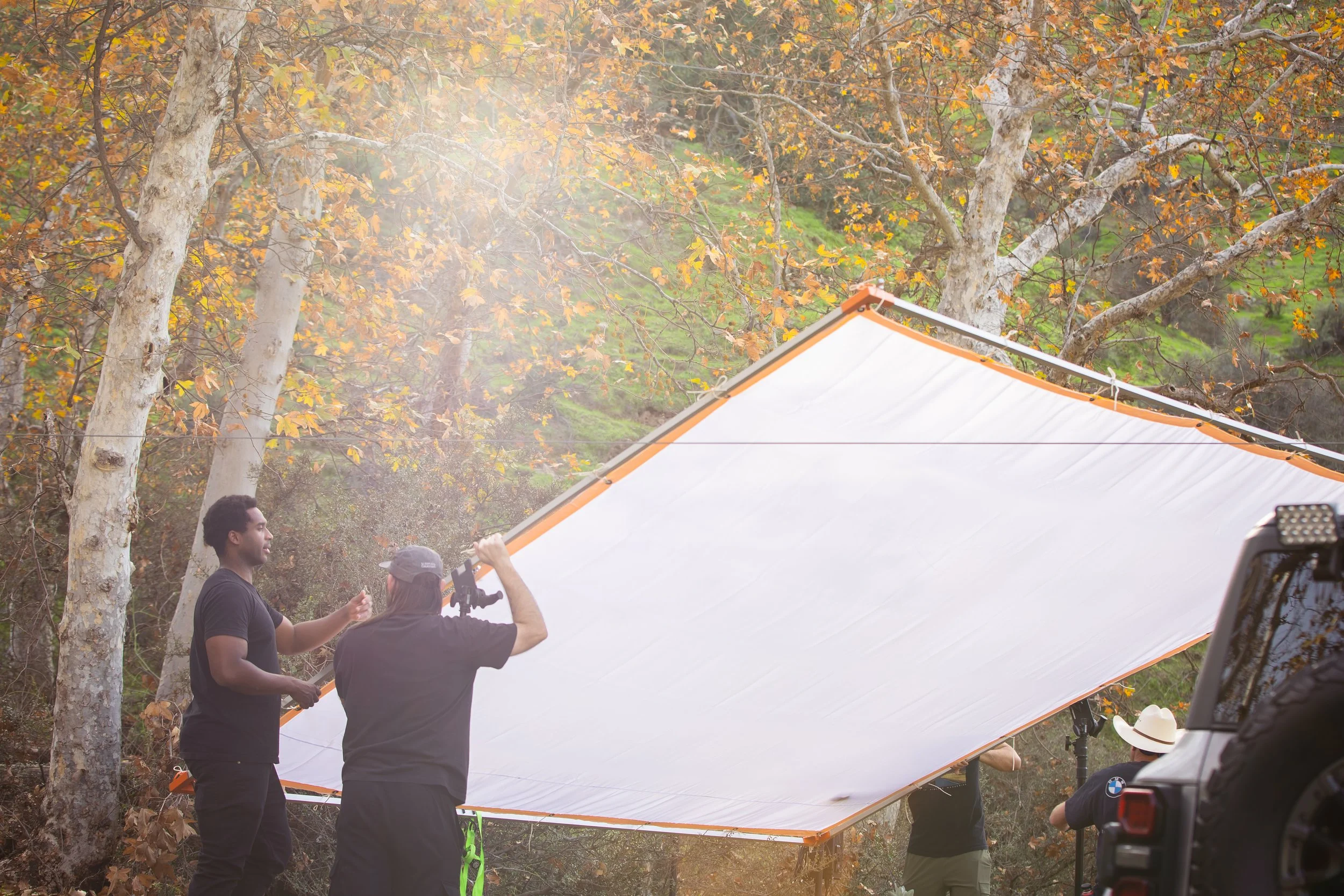
A 12×12 silk helped control our highlights.
Final Thoughts
Rain can absolutely elevate your film, but it demands respect. It slows your schedule down, complicates continuity, and punishes poor planning. But if you prep properly, think through your lighting, and accept that everything will get wet, it can be one of the most rewarding elements you put on screen.
Would I do it again?
Absolutely.
Would I do it without prep?
Not a chance.
If you’re considering rain for your next project, I hope this saves you some stress, and maybe a few muddy cables.